







How to Compare Quotes and Spot the HIdden Differences

Ever spend money on something for the farm that looked great in the quote… until you actually had to build it?
A lot of growers discover too late that two high tunnel packages with nearly identical specs can lead to completely different experiences once the work begins. One goes together smoothly and lasts for years. The other turns into weeks of frustration, extra trips for supplies, and constant repairs down the road.
That’s why comparing high tunnel kits takes more than looking at the price tag. The hidden details — how the structure connects together, how much cutting and drilling is left for the farmer, how the endwalls are built, and whether the system was truly engineered to work as a complete structure — can make all the difference. A cheap high tunnel often looks cheap only after you start building it.
We only build our own structures, but we’ve helped plenty of growers install their second high tunnel after a nightmare first experience with a cheaper kit. As one of our longtime best customers once quipped, “Nifty Hoops… cheaper than divorce!”
On the quote, two kits may look close. Same width, same basic steel description, same plastic covering. But once the installation begins, differences start showing up fast. How much cutting is left to do, how the frame fastens together, whether the endwalls are already designed, and whether the kit was built to go together predictably, or just hit a low price.
Why High Tunnel Quotes Are Hard to Compare
Two quotes can both say:
- 30’ x 96’
- Gothic frame
- Galvanized steel
- Double-layer plastic
- NRCS-eligible
- Endwalls included
But that doesn’t mean they are the same kit.
A quote can say “endwalls included,” whether that means a stack of lumber and instructions or a pre-cut steel endwall system. It can say “galvanized steel” whether the frame is mostly bolted together or mostly held together with self-tapping screws. Those differences do not always look dramatic on paper, but they show up immediately during the build.
The quote usually shows the dimensions and major materials. It often does not show how much field fabrication is required, how the frame is connected or assembled, how the endwalls are built, how serviceable the system is, or how much time you will spend fighting the kit.
What “Included” Actually Means
“Endwalls included.” “Plastic included.” “Ventilation included.” “Bracing included.” Those phrases are useful, but they are not enough.
“Endwalls included” might mean a complete steel endwall system, or it might mean materials that still need to be cut and framed on site. “Plastic included” might mean roof plastic only, or it might mean roof plastic, endwall covering, separate side curtain material, inflation equipment, and proper attachment hardware.
When comparing quotes, the question is not just whether something is included. The question is how finished it is when it arrives.
Assembly Design: The First Difference You Feel
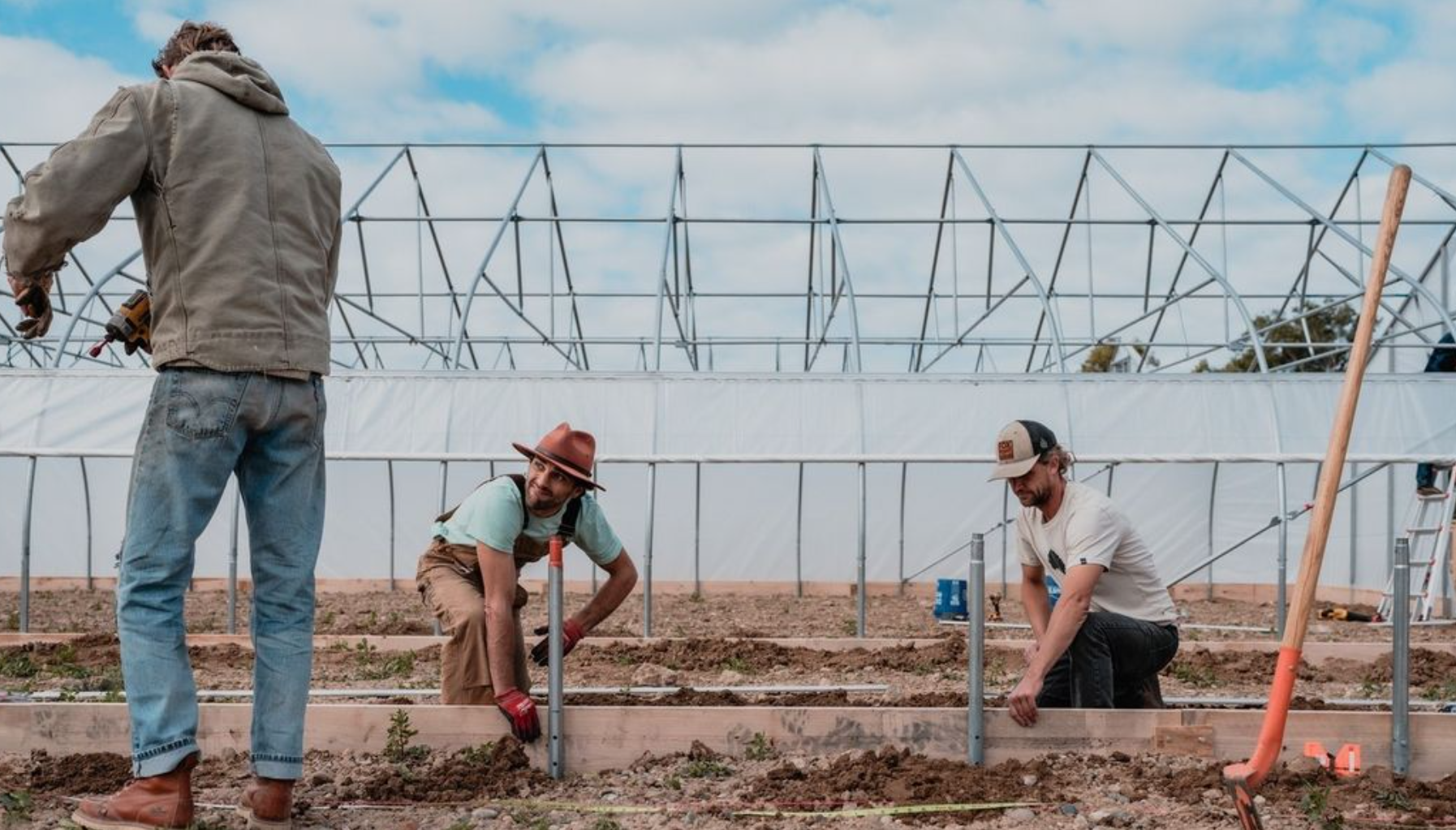
A cheap kit may not just be less durable, it may also be a miserable install.
Many structures require a large amount of cutting, drilling, measuring, aligning by eye, and guesswork. Often, this comes right in the middle of an already-busy growing season.
None of that shows up on the quote.
A good high tunnel kit should not require the farmer to become a fabricator. And it should not hold together with flimsy screws or brace bands.
The hardest part of a tunnel build is usually not the repeated work. It is the judgment calls. Where exactly does this bracket land? Is this tube square enough? Does this part need to be cut? Is this screw actually holding? A better kit removes as many judgment calls as possible before the material ever leaves the shop.
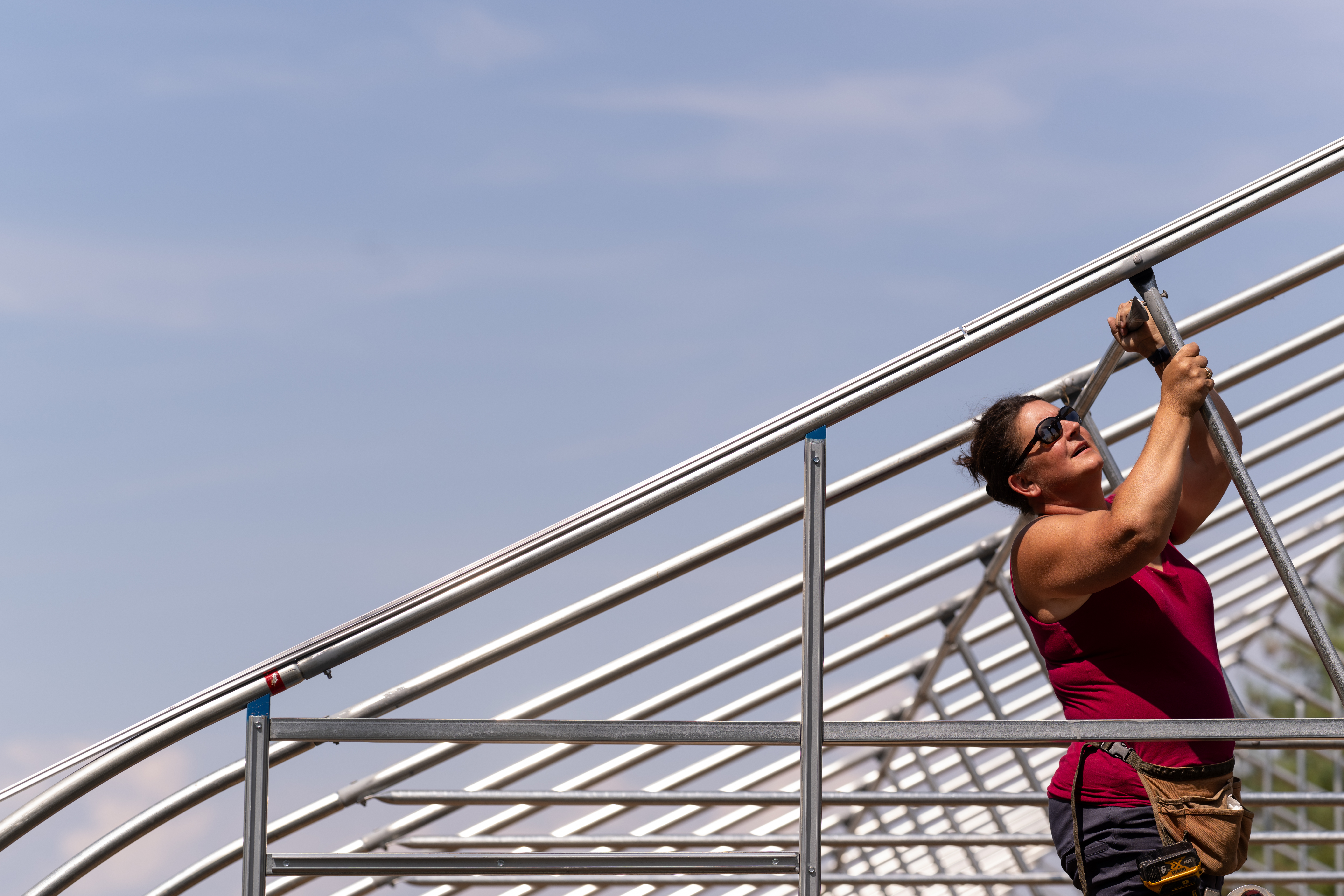
Systems with pre-designed connection points, pre-drilled holes for bolted assemblies, and well-organized and labeled parts make a major difference in the speed and quality of the build.
Connections: Bolts vs Self-Tapping Screws and Brace Bands
High tunnel quotes will rarely explain how the structure fastens together, and many structures rely on cheap or insufficient fasteners.
Self-tapping screws are fast and cheap, but they can work loose and snap. They simply do not provide the same serviceable connection as bolts. Bolted connections are easier to inspect, tighten, replace, and trust over time.
Self-tapping screws also depend on the installer. Too much torque strips the hole. Too little torque leaves the connection loose. If the screw goes in crooked or the hole wallows out over time, there is not much to tighten. A bolt gives you a stronger clamping connection, and years later, you can still put a wrench on it.
A self-tapping screw is fine for some jobs. It is not the same thing as a bolted structural connection.
Tube Size Matters, But It Does Not Tell You Enough
Tube diameter and gauge matter, but they do not tell you how the whole structure is assembled. Bracing, gussets, purlins, endwalls, and connection details often matter more than a small difference in pipe.
A larger tube with weak connections and sparse bracing is not automatically better than a smaller tube used in a better system
Pipe size is easy to put on a quote. The rest of the structure is harder to see.
Bracing and Gusseting: How the Frame Holds Its Shape
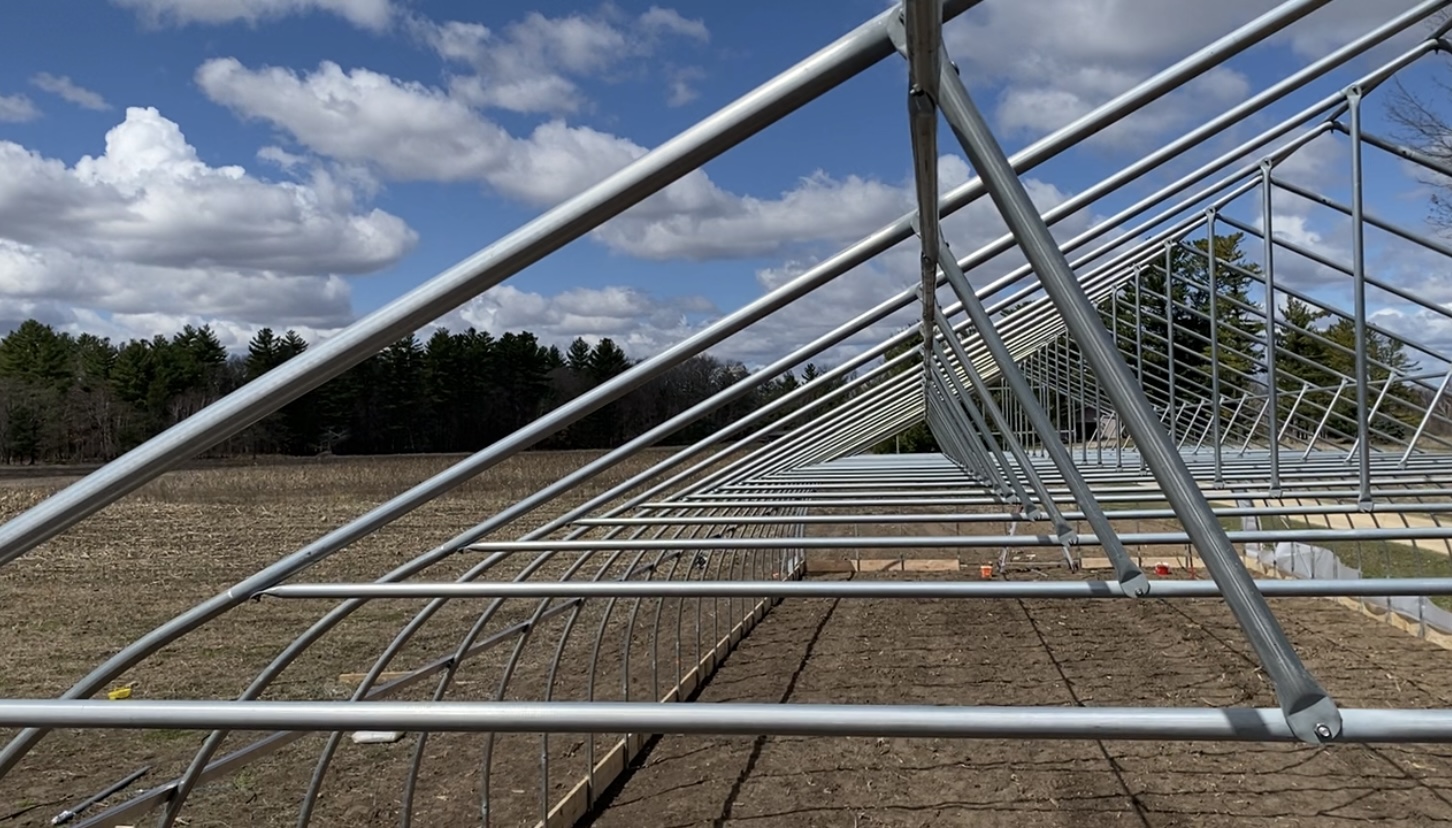
Bracing is what keeps the frame working as a frame, not as a collection of separate hoops. A bow by itself can flex. A bow tied into the rest of the structure has help. Cross-bracing, gussets, purlins, and truss assemblies spread forces into neighboring parts instead of leaving one connection or one tube to carry the load alone.
That support helps the frame carry load more evenly in wind, snow, and daily use. It’s hard to put this design into a quote. It’s worth looking deeper than the surface.
Endwalls: The Parts Cheap Kits Often Leave to the Customer
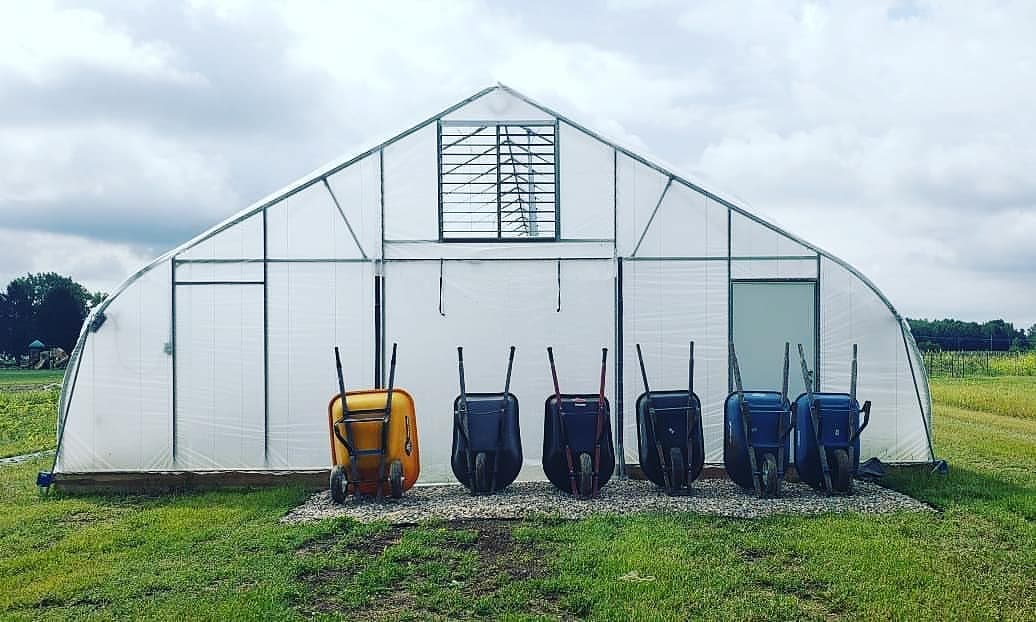
A quote may say “endwalls included”, but that does not tell you whether the grower is framing wood on site or assembling a pre-cut steel endwall that ties into the frame.
On Nifty Hoops structures, the steel endwall framing is already designed as part of the tunnel. The pieces are cut, notched, and made to land where they are supposed to land. You can frame an endwall quickly because the decisions have already been made in the shop.
A wood endwall may look cheaper in the quote, but the cost has not disappeared. It has been moved into measuring, cutting, fitting, replacing boards, and dealing with movement and failure later.
Framing your own wooden endwall can turn up good results, but results vary by builder skill, and these systems move, rot, twist, and will eventually need replacement. If that happens during bad weather, the endwall can become a weak point for the whole structure.
Pre-cut steel parts that integrate into the steel frame by design go up faster and become a part of the structure itself.
Endwalls take a beating on high tunnel structures, because they are head-on into the wind. They must be built as strong or stronger than the rest of the structure to last for the long haul.
Plastic and Wear Surfaces: Not All Covering Systems Are Equal
Double-layer plastic with integrated inflation system only one part of the covering package.
A quote may say “plastic included”, but that does not tell you whether the high-wear areas are handled differently from the roof.
Endwalls and ventilation curtains can take a lot of wear from use and environmental stress, so it's best not to cover them with the same 6-mil plastic used overhead. Nifty Hoops uses heavy-duty woven plastic material for the high-wear areas.
Attachment matters as well. High-quality channel and wiggle wire for endwalls and side curtains are a must. For overhead plastic, we prefer quick-locks above the side curtain. A quick-lock is an aluminum extrusion that rotates into the channel and locks the plastic along the length of the tunnel. That spreads strain across a long run instead of concentrating it at each wiggle wire bend.
Serviceability: Can You Fix It Later?
A good kit is not just strong on day one. It should be inspectable and repairable.
Bolts can be tightened and replaced. Self-tapping screws often strip out.
Standard parts are easy to swap. Custom field-made or field-drilled parts take time and close attention.
Custom-built endwalls can be repaired, but the repair is usually custom too. Standardized parts are easier to inspect and repair years later.
Serviceability matters before and after storms, after plastic replacements, and after years of use.
The Real Cost of a Cheap Kit
The bottom line is that a cheap kit might cost less in your first transaction, but costs will add up over time through:
- Longer installation time
- More field fabrication
- Weaker or less serviceable connections
- Wood replacement
- Hardware failures
- Plastic wear
- More frustration during maintenance
The point is not that every grower needs the heaviest tunnel on the market. The point is that the quote does not show everything. It does not show how much work has already been done in the shop, how many decisions have been removed from the build, or how easy a structure will be to service years later.
A cheaper kit may still be the right choice for some farms. But it should be chosen with clear eyes. The lowest quote is sometimes just the quote with the most work left out.
What to Ask When Comparing High Tunnel Kits
Once you have two (or more) quotes in front of you, the numbers alone won’t tell the whole story. Use these questions to cut through the surface similarities and see what’s really included, and what work will be left for you on-site.
- How are the frame connections made? Are the hoops, purlins and braces joined together with bolted structural connections, or mostly with self-tapping screws and brace bands? (Bolted assemblies are far more serviceable over time.)
- How much field fabrication is required? Will i need to cut, drill, measure, or align parts on-site, or is the kit pre-cut, pre-drilled, and labeled so it goes together predictably?
- What exactly is included with the endwalls? Is it a complete pre-cut, pre-notched steel endwall system that integrates with the main frame, or just lumber and instructions for me to build wood endwalls on site?
- How is the structure braced? What kind of cross-bracing, gussets, and truss assemblies are used to keep the frame rigid under wind, snow, and daily use?
- How are high-wear areas handled? Is the same 6-mil roof plastic used on the endwalls and side curtains, or is there heavier-duty woven material in the places that get the most abuse?
- What plastic attachment system is used? Is overhead plastic secured with channel and wiggle wire only, or do you also use quick-lock aluminum extrusions along the length of the tunnel for better strain distribution?
- How serviceable is the finished structure? Years from now, will I be able to easily inspect, tighten, or replace connections and parts, or will repairs require custom field fabrication?
- How are parts organized and delivered? Are components clearly labeled and bundled by assembly step, or will I be sorting through loose pieces and figuring out the build sequence myself?
High Tunnel Kit: Choosing the Right System for Long-Term Success
If you’re evaluating options right now, don’t just compare numbers — compare what’s actually included, how much work is left for you, and how the structure is engineered to go together in real life, not just in a quote.
Ready to Compare Your High Tunnel Kit Quotes?
We’ll walk through the details with you, line by line, and help you spot the hidden differences before you commit — so you can choose the system that actually fits your farm, your time, and your long-term goals. Reach out to learn more.