







High Tunnel vs. Greenhouse: Which One is Right for Your Farm?
Looking for ways to increase productivity and get more from your growing season?
Wondering which investments can make the biggest impact on your farm?
Maybe you want to start earlier in the spring, harvest later into the fall, or protect a specialty crop from unpredictable weather. But the question isn't whether a structure makes sense. It's which kind?
If you have a conversation with experienced growers, you'll hear both sides. Some swear by the simplicity of a high tunnel. Others won't go back once they've had a climate-controlled greenhouse, and plenty of farms run both.
In this guide, we'll break down what sets a high tunnel apart from a greenhouse, where each one earns its keep, and how to determine which investment makes the most sense for your operation.
What's the Difference?
On the surface, a high tunnel and greenhouse look similar. Both are covered growing structures. Both protect crops from the weather. Both extend what's possible on a farm that would otherwise be at the mercy of the calendar.
But the way they work — and what they cost to build and operate — is quite different.
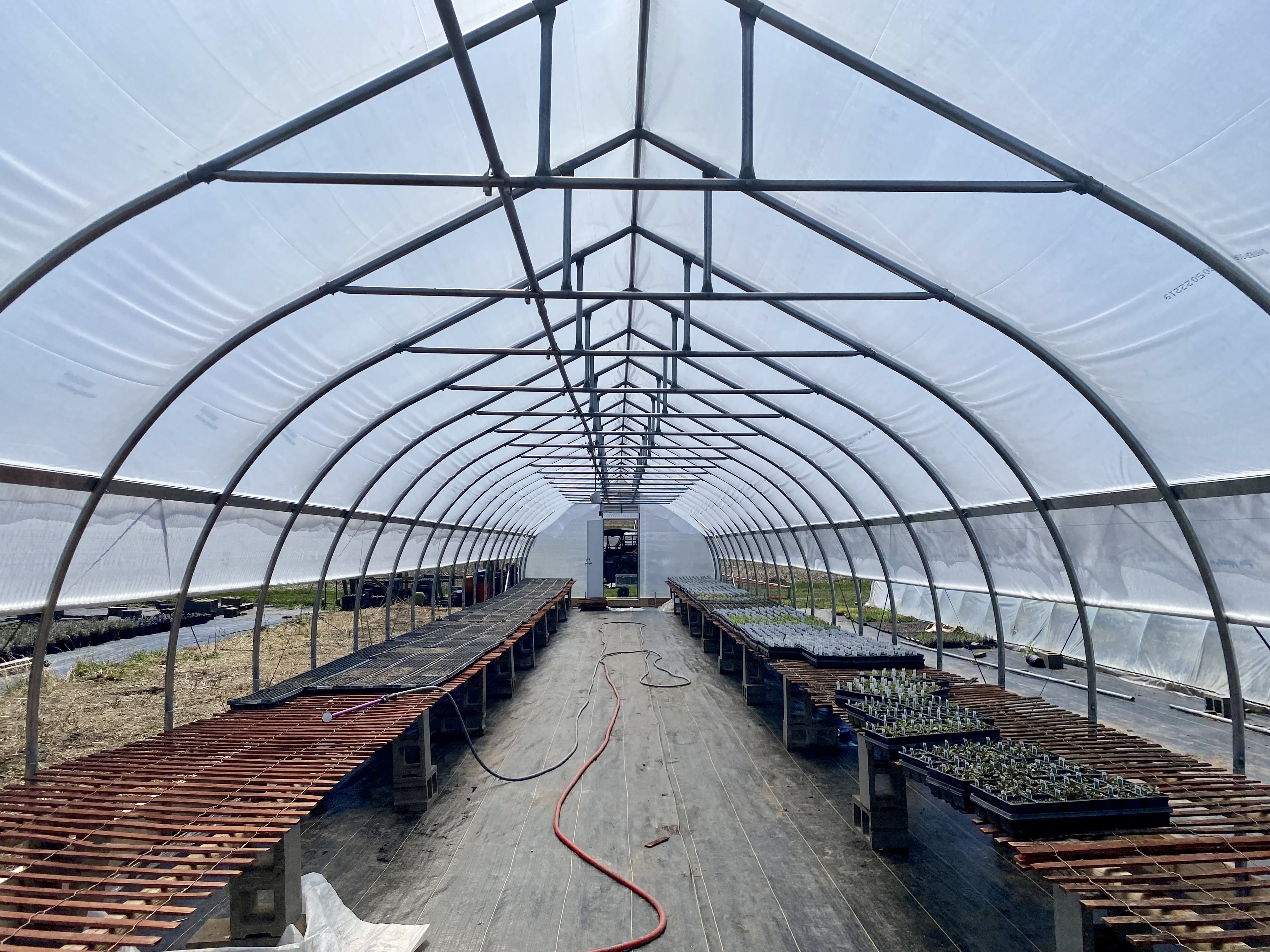
A high tunnel (sometimes called a hoop house) is an unheated, passively ventilated structure covered in greenhouse film (or poly). It captures solar heat during the day, retains it overnight, and relies on the farmer to manage temperature by opening and closing vents or rolling up the side curtains. There is no mechanical heating system and no electricity required for climate control.
A greenhouse is an actively managed environment. It typically includes mechanical heating, cooling, and ventilation systems, supplemental lighting, and environmental controls. Some are highly automated. All of them require infrastructure — power, fuel, and equipment — that a high tunnel does not.
Comparing the Costs
A well-built high tunnel is a meaningful investment, but it's a fraction of what a finished greenhouse typically costs. A greenhouse adds mechanical systems, utilities, more complex foundations, and in many cases, permits and engineering requirements that don't apply to a high tunnel.
But upfront cost is only part of the story.
A high tunnel has almost no operating costs beyond the occasional plastic replacement and routine maintenance. A greenhouse runs on energy and those costs compound year after year. Depending on your climate and what you're growing, operating costs for a heated greenhouse can exceed the original build cost within a few years.
For many farms, the better question isn't "Which one is cheaper to build?", It's "Which one helps me reach my production goals faster?"
What You Can Grow and When
A high tunnel gives you a longer season, not a different season. You're still growing with the sun. You're still working with ambient temperatures, just moderated ones. In most climates, that means:
- Starting transplants 4–6 weeks earlier in spring
- Extending harvest 4–6 weeks later in the fall
- Growing cold-hardy crops through mild winters in warmer regions (a major advantage for many growers)
- Protecting heat-loving crops like tomatoes, peppers, and cucumbers from unexpected temperature swings
What a high tunnel doesn't do is give you full control over the environment. On a cold January night in Michigan, the inside of a high tunnel is warmer than outside — but it's not warm. You can't grow warm season crops year-round without supplemental heat.
A heated greenhouse changes things considerably as you’re no longer racing the calendar. You can grow lettuce in January, start seedlings in February, and grow crops that would never survive a shoulder-season cold snap. If your market demands year-round production of specific crops, or if you're running a nursery operation with a consistent seedling schedule, a greenhouse gives you control that a high tunnel can't.
The tradeoff is that you're paying for that control every single month, in fuel bills and labor.
Management and Time Commitment
One reason many growers prefer high tunnels is that they're forgiving. You walk in, check the temperature, roll up the sides if it's hot, and close them if a cold snap is coming. The structure doesn't demand daily attention. Many growers check their high tunnels the same way they check on any other field crop.
A greenhouse requires commitment. Climate systems need monitoring, maintenance, and repair. Power outages become emergencies. A heating system failure on a cold night can wipe out weeks of crop. The more automated and controlled the environment, the more points of failure you're managing.
This isn't a reason to avoid greenhouses. It's simply important to understand what you're taking on before investing. A greenhouse rewards growers who want to optimize every variable. A high tunnel rewards growers who want a reliable, low-maintenance productivity boost without adding a second job to their operation.
Permits?
Generally, a high tunnel is considered a temporary or agricultural structure, which means it typically doesn't require a building permit, engineered drawings, or a permanent foundation. In many cases, you can drive posts into the ground, assemble the frame, and start growing relatively quickly.
A greenhouse (especially a heated, permanent one) often falls into a different regulatory category. You may need permits, engineered foundations, utility connections, and inspections. These add time, cost, and complexity before you ever plant a seed.
If speed to production matters, a high tunnel has a significant advantage.
Is a High Tunnel Right for Your Farm?
Both high tunnels and greenhouses can help growers extend their season and protect crops, but the best choice depends on your goals. If you're looking for an affordable, low-maintenance way to extend your season and increase productivity, a high tunnel is often the first structure growers consider.
Not sure which option is right for you? Our team is happy to help! Reach out to discuss your goals and learn how a high tunnel can support your farm's success.