







Snow Load 101: How Much Snow Can Your Hoop House Handle?
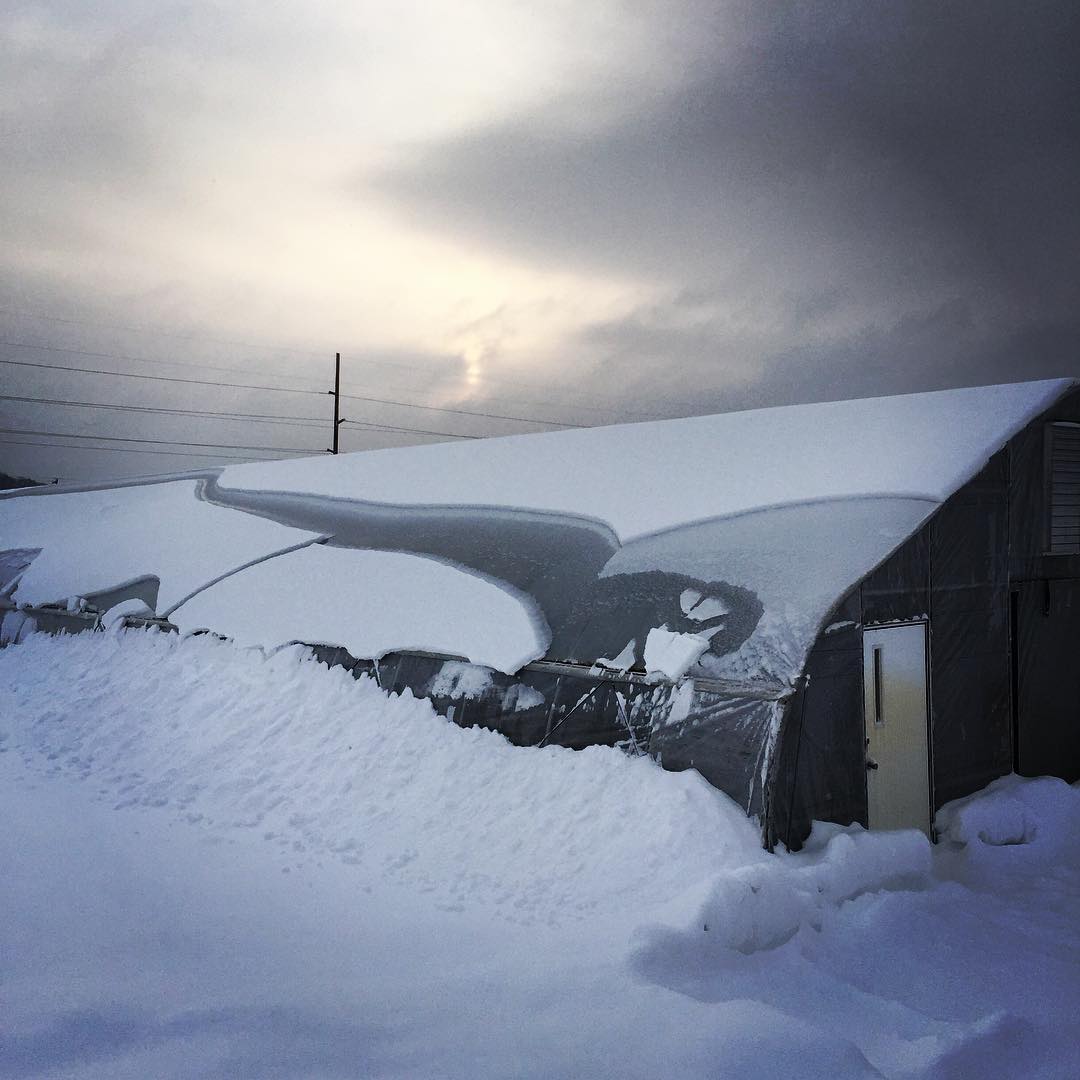
When snow starts piling up across Michigan, it’s natural to worry about how your hoop house will hold up. Are a few inches of snow anything to worry about?
What about a heavy, wet snowfall followed by freezing temperatures? How can you tell when the weight on your structure is becoming a problem?
For growers, these aren’t just winter weather concerns. A collapsed high tunnel can damage crops, disrupt your growing plans, and leave you facing expensive repairs in the middle of the season. Knowing what affects snow load can help you recognize potential risks and prepare before the next storm rolls in.
What Is Snow Load, Really?
Snow load is simply the weight of accumulated snow and ice pressing down on your structure, measured in pounds per square foot (PSF). The catch is that depth tells you almost nothing about weight. What matters is the water content of the snow.
A rough rule from extension engineers: every inch of water contained in snow adds about 5 pounds per square foot. Light, fluffy snow might pack a foot of depth into just one inch of water — roughly 5 PSF. But heavy, wet snow can reach that same 5 PSF in only three or four inches of accumulation. Ice is heavier still. In other words, four feet of dry powder can weigh less than four inches of slush.
Those numbers sound small until you spread them across a whole tunnel. At just one inch of water equivalent, a mid-sized high tunnel can be carrying several tons of load across its roof. Stack up a wet, heavy storm, or a thaw-and-refreeze that turns snow to ice, and the weight climbs fast.
How Much Snow Can a High Tunnel Handle?
As extension specialists put it, the design, the number and spacing of the bows, and the gauge of the steel all determine how much a given tunnel can bear. A lightweight, widely-spaced Quonset frame and a heavy-gauge, closely-spaced gothic frame are not in the same league.
Two things matter most: the shape of the frame, and how that frame is held together.
- Bow geometry does the first job. Our gothic bows carry a steep, peaked profile, and that shape is the first line of defense against snow. Instead of letting snow sit and build the way a rounded, Quonset-style roof does, the gothic peak sends it sliding down the sides before it can accumulate into a dangerous load. A tunnel that sheds snow on its own is a tunnel you're not out at midnight clearing. It's the reason the gothic shape is preferred (and often required) in snow country.
- The connections do the second. Here's where a lot of tunnels quietly give out: most budget hoop houses are held together with bands — brackets that clamp around the steel and rely on friction to hold. Under a heavy, shifting snow load, banded joints can slip, twist, and work loose, and once a connection moves, the whole frame loses strength right when it needs it most. Nifty Hoops tunnels are built differently. We use a bolt-through design, meaning our steel is physically bolted together, not clamped, so every joint is a locked, mechanical connection that doesn't slip under load. It's a meaningfully stronger way to build a tunnel, and it's a big part of why ours stand up to snow that flattens lighter structures.
Add in strong, closely-spaced bows and quality American-made steel, and you get a frame engineered to carry weight rather than hope it holds. Here's more on how we build and what makes our hoop houses durable.
The single most useful number you can know is your tunnel's design snow load — the PSF it's engineered to carry. If you don't know yours, ask your manufacturer. Nifty Hoops customers can always reach us to confirm the rated capacity of their structure.
The Michigan Snow-Load Picture
Michigan's building code assigns a ground snow load to every county, the baseline design value structures are expected to handle, and those numbers climb sharply as you move north and toward the lake-effect belts.
Down in the southern Lower Peninsula, ground snow loads sit around 25 PSF. (Ann Arbor, home of Nifty Hoops, is a 25 PSF zone.) Move into mid-Michigan, and you're looking at 35 to 40 psf. Head up the northern Lower Peninsula and the lake belts (places like Benzie, Antrim, and Alpena), and the figure jumps to 50 or 60 PSF. In much of the Upper Peninsula, counties like Alger and Baraga are rated at 70 PSF.
The lesson: a tunnel that's perfectly safe in Washtenaw County may be badly under-built for Gaylord or the Keweenaw. Your location should drive your structure choice, not the other way around. If you're farming up north, a stronger frame isn't an upgrade; it's a requirement.
Warning Signs Your Tunnel Is Under Stress
During and after a storm, your tunnel will tell you if it's struggling. Learn to read it:
- Sagging or pooling plastic. When the cover stretches and dips between purlins, snow and ice collect in those low spots. This is one of the most common triggers of collapse — the snow itself is often less the problem than the pockets the sagging plastic creates.
- Visibly bending or deflecting bows. If the arches are flexing inward or flattening out under load, the frame is overloaded.
- Creaking, popping, or groaning steel. Sounds of stress are a signal to act.
- Uneven, lopsided loading. Wind can drift snow heavily onto one side. An asymmetric load is especially dangerous because the weight isn't distributed evenly across the frame — one side can buckle while the other looks fine.
How to Manage Snow Safely During a Storm
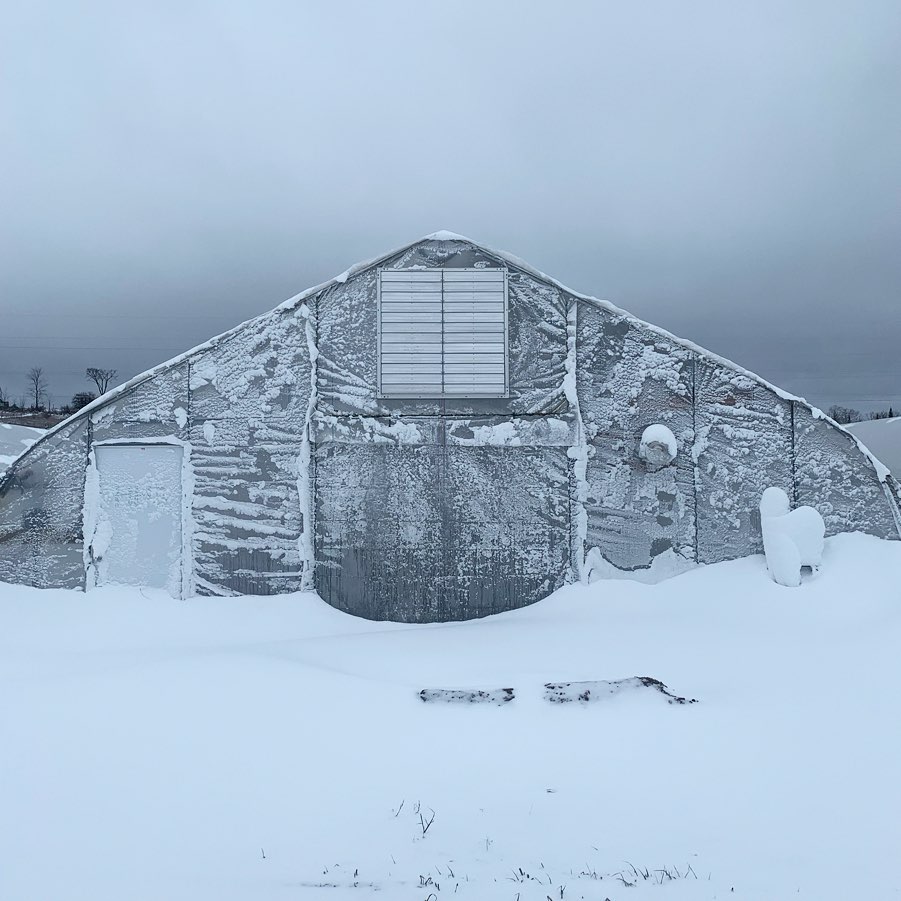
A well-built gothic tunnel does most of the work for you — snow slides off the steep sides on its own. But in a long, heavy storm, a little active management keeps that shedding working. The goal is simple: give the snow somewhere to go, and help it on its way before it piles up.
- Keep the sides clear so snow has somewhere to fall. This is the one growers forget most. Your tunnel sheds snow down its sides — but if a wall of snow builds up along the base, the snow sliding off has nowhere to go. It backs up against the tunnel and starts loading the frame instead of leaving it. Shovel, blow, or plow the perimeter clear so there's always an open landing zone on both sides.
- Try the "flossing" method. Toss a rope (or a strap) over the tunnel so it hangs down both sides, grab an end with a partner, and saw it back and forth as you walk the length of the tunnel, like flossing. It slices under the snow and slides it right off the plastic. It's fast, it's gentle on the cover, and nobody has to climb anything.
- Use a soft-bristle broom, not a shovel. For snow you can reach, a soft-bristle push broom clears the plastic without roughing it up. Skip anything hard or sharp: scraping and gouging the poly makes it rougher, and a rougher cover makes snow stick worse in the next storm.
- Work both sides evenly. A tunnel is most stable when the load is balanced, so clear both sides as you go rather than stripping one and leaving the other heavy.
- Never climb on top of a loaded tunnel, and don't open roll-up sides under snow as the cover can tear and dump the whole load onto your crops.
The Real Fix: Build for Your Snow Load From the Start
Storm-day management matters, but the most important snow-load decision happens long before the first flake falls, when you choose your structure. A tunnel built to shed and carry snow spends the winter working with the weather instead of fighting it.
That's the standard we build to. Our gothic high tunnels pair a peaked bow geometry that sheds snow with our bolt-through construction that holds the frame rock-solid under load, a genuinely stronger structure than the band-clamped tunnels it's so often compared to. They're engineered to stand up to real Midwest winters, the kind we farm in ourselves, right here in Michigan. When you're planning a tunnel, we'll help you match the structure to your location so snow load is something you manage, not something you lie awake worrying about.
Choose a High Tunnel Built to Last
Winters can be unpredictable, but worrying about whether your hoop house will survive the next heavy snowfall shouldn't be part of your growing season. Choosing a structure with the right snow-load rating, a snow-shedding design, and dependable connections can help protect your crops and give you greater peace of mind when winter weather hits.
Ready to find the right high tunnel for your farm? Explore our durable hoop house designs or contact us to discuss your growing needs and snow-load requirements before the next Michigan winter arrives.